2026-06-07 14:50
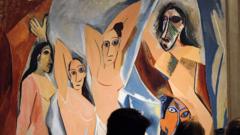
'Les Demoiselles d'Avignon', arguably one of the most controversial works by Pablo Picasso continues to spark debates even a century after its inception. Traditionally met with admiration and loathe in equal measure, the provocative masterpiece finds itself reinterpreted and questioned by American artist, Henry Taylor. His challenging interpretation is on display at the National Picasso Museum in Paris.
The Historical Context of 'Les Demoiselles d'Avignon'
'Les Demoiselles d'Avignon', originally titled 'Las señoritas de Avignon', was completed by Picasso in 1907. Art historians often link this piece of art to the genesis of Cubism, a revolutionary movement that Picasso spearheaded along with George Braques. The painting depicted five nude women, a re-imagination of African tribal masks, interpreted as Picasso's reflections on the inherent savagery in mankind.
Henry Taylor's Reinterpretation and its Implications
Centuries later, Henry Taylor, a widely acclaimed American artist, presents a critique and reinterpretation of 'Les Demoiselles d'Avignon'. His pigmented canvas initiates a new discussion around Picasso's portrayal of the female form and the cultural representations therein. Taylor’s rendition nudges the spectator to question, reinterpret, and understand Picasso's work in a fresh, contemporary context, offering an intriguing new perspective in the history of art.
Fuente original: BBC Mundo